
Identity is the New Perimeter: What Founders Need to Understand About Access Control
CYBERSECURITY
Understanding IAM Basics without Jargon
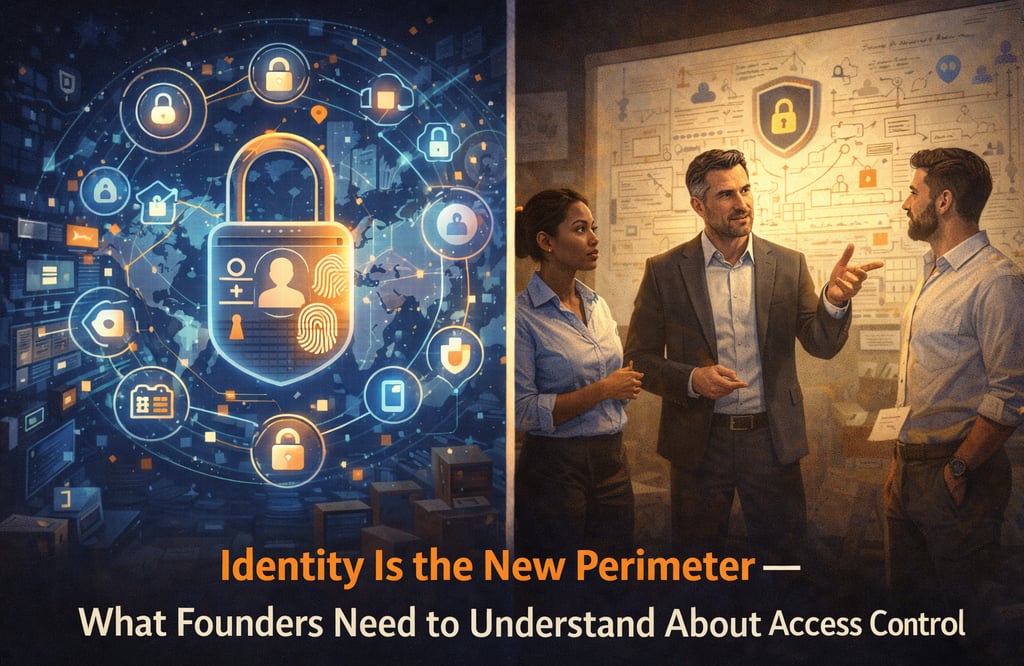
Identity and Access Management (IAM) plays a crucial role in digital security by ensuring that the right individuals have the correct access to resources. At its core, IAM encompasses three fundamental components: identity verification, authentication, and authorization. Understanding these elements can help founders navigate the complexities of access control effectively.
To begin with, identity verification is akin to confirming someone's identity in real life. For example, when you enter a bar, the staff may ask for your ID to ensure you meet their age requirements. Similarly, in the digital world, identity verification ensures that users are who they claim to be, often through methods such as usernames, email addresses, or even biometric data like fingerprints.
The next component, authentication, is the process of confirming that the verified identity actually belongs to the person trying to gain access. This step may involve entering a password or receiving a one-time code on a mobile phone, analogous to the bouncer checking your ID and matching it against your appearance. It ensures that only the rightful owner of an identity can access their account or data.
Lastly, authorization determines what an authenticated user can do or see. This process is comparable to allowing patrons in a bar to venture into specific areas based on their level of access—perhaps VIP sections for paying members and public areas for all guests. In an IAM context, this could mean limiting access to sensitive data only to certain roles or individuals within an organization, thus maintaining security while also enabling productivity. By grasping these basic concepts, founders can start to appreciate the significance of IAM in protecting their company’s assets and maintaining user trust.
Why Breaches Start with Access
Access control is a foundational pillar of security in any organization. It determines who can access particular data or systems and establishes an essential framework for protecting sensitive information. Breaches frequently occur when access management is improperly handled, underscoring the critical role that effective access control plays in maintaining security. In recent years, numerous high-profile breaches can be traced back to inadequate access protocols, leading to significant ramifications for affected organizations.
One prominent example is the 2017 Equifax data breach, which compromised the personal information of approximately 147 million individuals. The breach was primarily attributed to a failure in managing access controls effectively. Attackers exploited an unpatched vulnerability in the company’s web application framework, which could have been mitigated through stricter access management practices. This incident highlights how negligent access controls can lead to devastating consequences for reputations and customer trust, particularly for startups and scale-ups that may not recover from such calamitous breaches.
Another case is the Capital One breach in 2019, where over 100 million customer accounts were exposed due to a misconfiguration in the cloud infrastructure. The attackers took advantage of excessive permissions granted to a single user, ultimately accessing sensitive data with relative ease. This incident serves as a reminder that unrestricted access to sensitive areas, along with poorly defined permissions, can create severe vulnerabilities.
Common vulnerabilities arise from mismanagement of access privileges, such as using weak passwords, not regularly reviewing access permissions, and failing to implement multi-factor authentication. As attackers increasingly target weak access controls and privilege escalations, organizations must enforce stringent access policies. By restricting access to sensitive data and employing best practices, businesses can significantly reduce the likelihood of falling victim to security breaches.
Practical Early Steps for Effective Access Control
Establishing effective access control is paramount for startups, as it sets the foundation for securing sensitive data and ensuring that only authorized personnel can access critical resources. The initial step involves creating clearly defined user roles within the organization. By categorizing employees based on their job responsibilities, founders can allocate permissions that correspond to the specific functions of each role. This targeted approach minimizes the risk of unauthorized access and reduces the potential for internal data breaches.
In conjunction with user role creation, implementing the principle of least privilege is essential. This means granting users the minimum level of access required to perform their job functions effectively. By applying least privilege access principles, organizations can significantly limit the exposure of sensitive data to only those individuals who truly need it. This method not only secures data but also aids in compliance with industry regulations.
Another crucial step is integrating multi-factor authentication (MFA) into the access control framework. MFA enhances security by requiring users to provide two or more verification factors when accessing systems or data. These factors can include something the user knows (like a password), something the user has (like a phone or hardware token), or something the user is (like biometric verification). Implementing MFA drastically improves security and makes unauthorized access considerably more difficult.
Selecting the right Identity and Access Management (IAM) tools is also a fundamental aspect of developing effective access control protocols. Founders should assess their budget and scale before choosing IAM solutions. Many user-friendly platforms exist that cater to startups, offering necessary functionalities without overwhelming costs. Finally, as the business grows, it is important to regularly reassess and manage access controls, ensuring they evolve alongside the company’s needs and complexities. This ongoing management will help maintain robust security and protect sensitive information from emerging threats.
The Role of Identity in Modern Security Frameworks
In the evolving landscape of cybersecurity, identity has become a critical element within modern security frameworks. Traditional perimeter defenses, such as firewalls and virtual private networks (VPNs), are increasingly inadequate in protecting organizations from sophisticated cyber threats. The rise of remote work and the use of cloud-based services have blurred the lines of the network perimeter, thereby necessitating a paradigm shift towards an identity-centered security approach.
The concept of "identity as the new perimeter" recognizes that safeguarding access based on user identity is essential in mitigating risks associated with unauthorized access. This approach is central to frameworks like Zero Trust, which mandates that no user, whether inside or outside the organization, should be trusted by default. Instead, robust identity and access management (IAM) protocols ensure that access is granted based on the principle of least privilege, verifying identities continuously, and monitoring user behavior.
An effective IAM system integrates seamlessly with various security measures; it works in concert with multi-factor authentication (MFA), endpoint security, and data encryption to create a strong defense against breaches. By tightly coupling identity validation with access controls and security policies, organizations not only safeguard critical data but also personalize user experiences across platforms.
For founders, understanding the role of identity in their security strategy is paramount. Implementing an identity-centric approach not only bolsters security protocols but also enhances organizational resilience against evolving cyber threats. By prioritizing identity management within their frameworks, businesses can achieve a more agile and secure operational environment, fortifying their defenses in an increasingly complex digital world.
Cultural Shifts: Building a Security-Conscious Organization
As organizations evolve in an increasingly digital landscape, the cultural shift towards a security-conscious mindset becomes paramount. A security-first approach not only instills confidence among employees but also significantly enhances access control measures. To achieve this cultural transformation, organizations must prioritize training and awareness programs that are designed to educate employees about the importance of security in everyday business operations.
Training programs should provide comprehensive insights into potential threats, including phishing attacks, data breaches, and insider threats. Regular workshops can serve as an effective platform for updating employees on the latest developments in security protocols and technologies. By integrating practical examples and interactive scenarios, these programs can foster greater engagement and retention of security knowledge. Furthermore, leadership plays a crucial role in this cultural shift; executives must lead by example, demonstrating a commitment to security in their decisions and actions.
Communication is another vital element in building a security-conscious culture. Companies should create open channels for discussing security concerns and best practices. Regular updates through newsletters or internal bulletins can keep security top-of-mind for all employees. Additionally, encouraging employees to report any security-related incidents without fear of repercussions can greatly improve the organization's overall security posture. Management should actively engage in these discussions, reinforcing the message that security is everyone's responsibility.
Lastly, organizations should embed security considerations into their everyday business practices. This includes integrating security checks into standard operational workflows and ensuring that access control measures are a part of project planning. By making security a consistent element of the organizational fabric, companies can cultivate a proactive stance towards potential threats, thereby minimizing risks and enhancing overall resilience.
Leveraging Technology to Strengthen Access Control
In the landscape of modern business, access control has become crucial for safeguarding sensitive information and maintaining operational integrity. Founders can leverage a myriad of technologies to enhance their access control measures, ensuring that only authorized personnel may access critical resources, thus fortifying their organization's defenses.
One prominent solution is Single Sign-On (SSO), which streamlines user authentication processes by allowing individuals to log in just once to access multiple applications. This not only improves user experience but also reduces the likelihood of password fatigue, which is a common cause for security breaches. By integrating SSO, founders can enhance both security and user convenience, making it easier to manage user access across various services.
Another vital aspect of strengthening access control is Identity Federation. This technology establishes partnerships among multiple domains, allowing for secure authentication across different systems without the need for multiple credentials. Identity Federation promotes seamless collaboration between organizations while maintaining strict security protocols, enabling founders to scale their operations without compromising on access control measures.
Furthermore, incorporating artificial intelligence (AI) into access control frameworks offers a transformative advantage. AI can effectively monitor access patterns to detect anomalies and potential threats in real-time. By employing machine learning algorithms, AI can learn from historical data to identify unusual access behaviors, providing alerts for suspicious activities. This capability not only enhances security but also aids in fulfilling compliance requirements by maintaining a thorough audit trail of access-related transactions.
In conclusion, leveraging technology such as Single Sign-On, Identity Federation, and artificial intelligence can significantly enhance access control measures. By understanding and implementing these advanced technologies, founders are better equipped to protect their organizational assets while facilitating efficient access management.
Planning for the Future: Scalability and Fortification of Access Controls
As startups evolve into scale-ups, the scalability of access control systems becomes an increasingly critical concern. Founders must prioritize not only the immediate needs of their organizations but also anticipate future growth. It is essential to develop access control policies that can adapt to changing circumstances without compromising security. A well-structured access control framework allows for seamless integration and updates as business requirements evolve.
A significant challenge during this transition is the complexity introduced by multi-cloud environments. As organizations expand, they often leverage multiple cloud service providers to optimize performance and minimize costs. This can lead to a fragmented approach to access management. Founders should consider implementing a centralized identity and access management (IAM) system that consolidates user access across all platforms. Such systems empower businesses to streamline access control processes, ensuring that users have the appropriate permissions while minimizing security risks.
Moreover, regulatory compliance cannot be overlooked in this planning phase. With the emergence of various regulations concerning data protection and privacy, including GDPR and HIPAA, organizations must ensure that their access control policies meet compliance standards. This may involve regular audits of access controls, continuous monitoring of user activities, and the adaptation of policies to meet evolving legal requirements. Founders should proactively engage legal and compliance teams in the access control planning process to align business objectives with regulatory obligations.
Ultimately, effective planning for scalability in access control not only enhances security posture but also fosters a robust foundation for future growth. By adopting a proactive approach and considering multi-cloud complexities and compliance responsibilities, founders can establish a resilient access control environment that accommodates both current and future business demands.